If your work takes you across the Triangle, your Cary commute can feel easy or frustrating based on one simple thing: which corridor you use most often. Cary is a strong home base because it sits near Raleigh, Raleigh-Durham International Airport, and major routes that reach Durham, Chapel Hill, Apex, and RTP. This guide will help you match Cary neighborhood areas to real commute patterns, transit options, and day-to-day lifestyle needs so you can focus your search with more confidence. Let’s dive in.
Why Cary Works for Triangle Commuters
Cary’s location is one of its biggest strengths. The town sits adjacent to Raleigh and RDU Airport, while downtown Durham and Chapel Hill are each about 20 miles away. Cary is also served by Amtrak at Cary Depot, which adds another transportation option for some buyers.
That said, commute convenience in Cary is not one-size-fits-all. NCDOT identifies I-40, I-440, U.S. 1, U.S. 64, and the Triangle Expressway and NC 540 system as major commuter corridors. In practice, your best neighborhood often depends less on the town as a whole and more on how quickly you can reach the route you use every day.
Traffic is a major part of the equation. NCDOT reports that the U.S. 64 corridor through western Cary is a high-volume traffic area, with especially heavy rush-hour pressure. On U.S. 64 between Apex and Cary, traffic ranges from more than 40,000 vehicles per day west of Laura Duncan Road to more than 56,000 at U.S. 1, with growth expected to exceed 40% by 2040.
NCDOT also says the broader I-40/I-440/U.S. 1/U.S. 64 corridor is expected to see traffic growth of 55% to 70% over the next 25 years. That is why two homes with the same Cary address can offer very different daily experiences depending on access points, ramp choices, and timing.
Think by Corridor, Not Just Neighborhood
When you start comparing Cary neighborhoods, it helps to think in commute patterns first. A beautiful home can still be the wrong fit if it puts you on the wrong side of your most-used route. For many buyers, the smartest search starts with where you need to go most often: Raleigh, RTP, the airport, Apex, or a mix of destinations.
A useful way to frame Cary is this: Downtown Cary tends to work best for transit access and walkability, northwest Cary tends to fit RTP and airport commuters, and south or central Cary often feels most balanced for buyers splitting time across Raleigh and the southern Triangle. That is based on current route networks and planning context, not an official town ranking.
Downtown Cary for Transit and Walkability
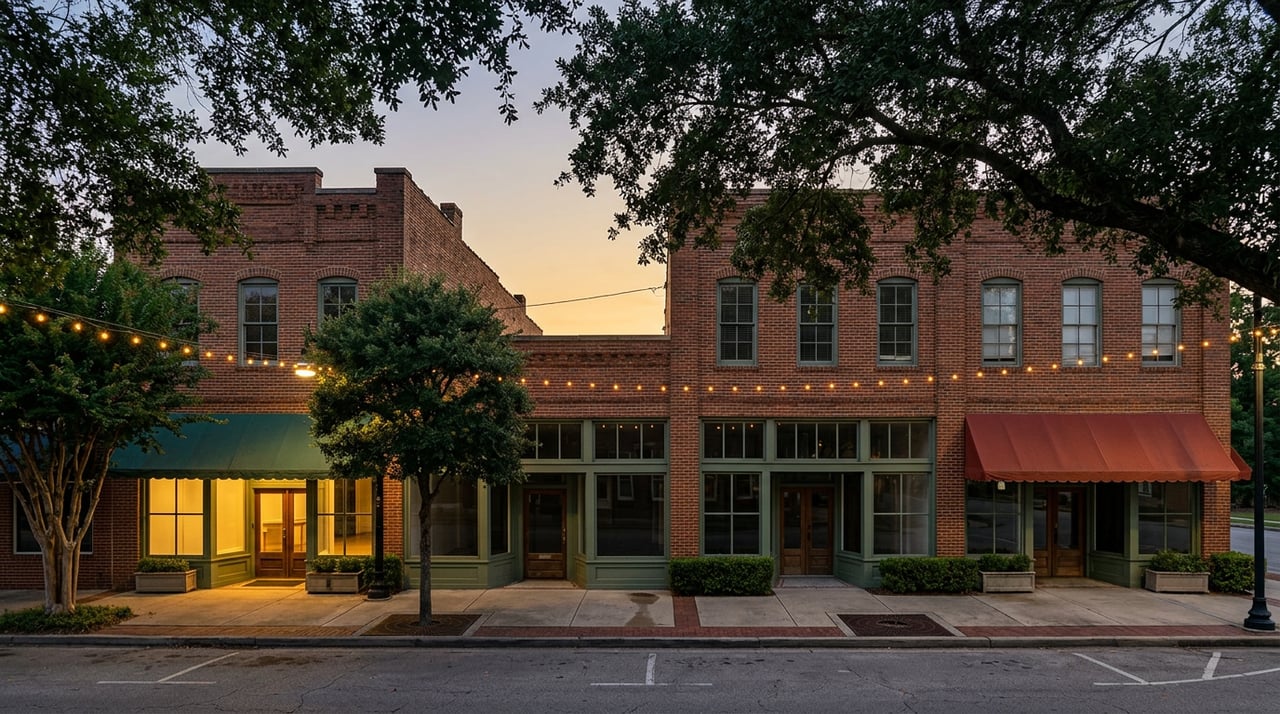
Downtown Cary is the clearest choice if you want to reduce how much you rely on driving. Cary Depot serves as a free park-and-ride and is the primary transfer station for GoCary routes. The downtown area also includes the fare-free GoCary Downtown Loop and a growing mixed-use core.
Current transit service supports the downtown-to-Raleigh and RTP axis especially well. GoTriangle Route 300 serves Cary and Raleigh, Route 310 links Cary Depot with Wake Tech RTP and the Regional Transit Center, GoCary Route 2 connects downtown Cary with NC State, and Route 9 connects downtown Cary with Apex.
This area makes the most sense if you value walkability, transit access, and an in-town feel. Cary’s housing planning also points to Downtown as a place where more walkable, connected living is being encouraged. That usually means buyers here should be open to apartments, condos, townhomes, and older in-town housing rather than expecting large-lot suburban homes.
Downtown Cary can be especially appealing if your commute is flexible, hybrid, or partly transit-based. It also works well if you want everyday conveniences nearby and like the idea of a home base that feels connected rather than car-dependent.
Northwest Cary for RTP and Airport Access
If you commute to RTP, Morrisville, or RDU Airport, northwest Cary is often one of the most practical areas to consider. The Carpenter Community Plan describes this part of Cary as convenient to RTP, RDU, and I-540. It also notes a range of housing choices, including single-family homes, townhomes, condominiums, and loft apartments.
NCDOT says the Morrisville Parkway interchange improved connectivity in west Cary and reduced congestion near Green Level West Road and N.C. 55. That matters because small infrastructure changes can make a big difference when you are repeating the same drive five days a week.
This part of Cary often attracts buyers who want newer-feeling, more master-planned communities. Official planning maps show west Cary communities and areas that buyers commonly compare here, including Amberly, Carpenter Village, Westpark, Cary Park, Highcroft, and areas around Morrisville Parkway.
For some commuters, northwest Cary offers the best balance of access and housing variety. If your priority is shortening the trip to RTP or keeping airport runs simpler, this is usually a smart section of Cary to study first.
South and Central Cary for Flexible Commutes
South and central Cary are often the most adaptable choices if your workweek takes you in more than one direction. These areas can make sense for buyers commuting to Raleigh, Apex, or multiple Triangle destinations depending on the exact address and road access.
NCDOT identifies I-40 and U.S. 1 as major commuter corridors, and the Triangle Expressway now extends from the N.C. 55 Bypass to I-40/U.S. 70. The full Complete 540 project is scheduled to finish in 2028, which is another reason many buyers are watching this part of the map closely.
In this section of Cary, the details matter. Access to roads such as Cary Parkway, Kildaire Farm Road, Tryon Road, and nearby highway ramps can shape your daily routine as much as the neighborhood name itself.
Official planning maps list established neighborhoods and planned developments in this broad area such as Lochmere, Panther Creek, Regency Park, Weatherstone, Silverton, Wellington Park, Kildaire, and Southbridge. If you need a home base that can handle changing office days or multiple destinations, south and central Cary often deserve a close look.
Lifestyle Matters After the Drive
A manageable commute is important, but your neighborhood still has to work when you are not in the car. Cary has more than 100 miles of greenways and more than 30 parks and natural areas. The town says those greenways connect parks, natural areas, schools, retail areas, and employment centers.
For many buyers, that network adds real day-to-day value. Cary also reports that its greenways and on-road bike facilities span more than 200 miles, with bike repair stations, bike lockers at the train depot, and bus bike-rack service for last-mile travel. If you like to mix driving with biking, walking, or transit, those features can influence which part of Cary feels most practical.
South and central Cary buyers often notice nearby recreation options such as Harold D. Ritter Park, Hemlock Bluffs, Symphony Lake Greenway, and White Oak Creek Greenway. Downtown Cary buyers may focus more on connected living and in-town convenience. Northwest Cary buyers often compare newer community layouts and access to west Cary routes.
Housing Types Vary Across Cary
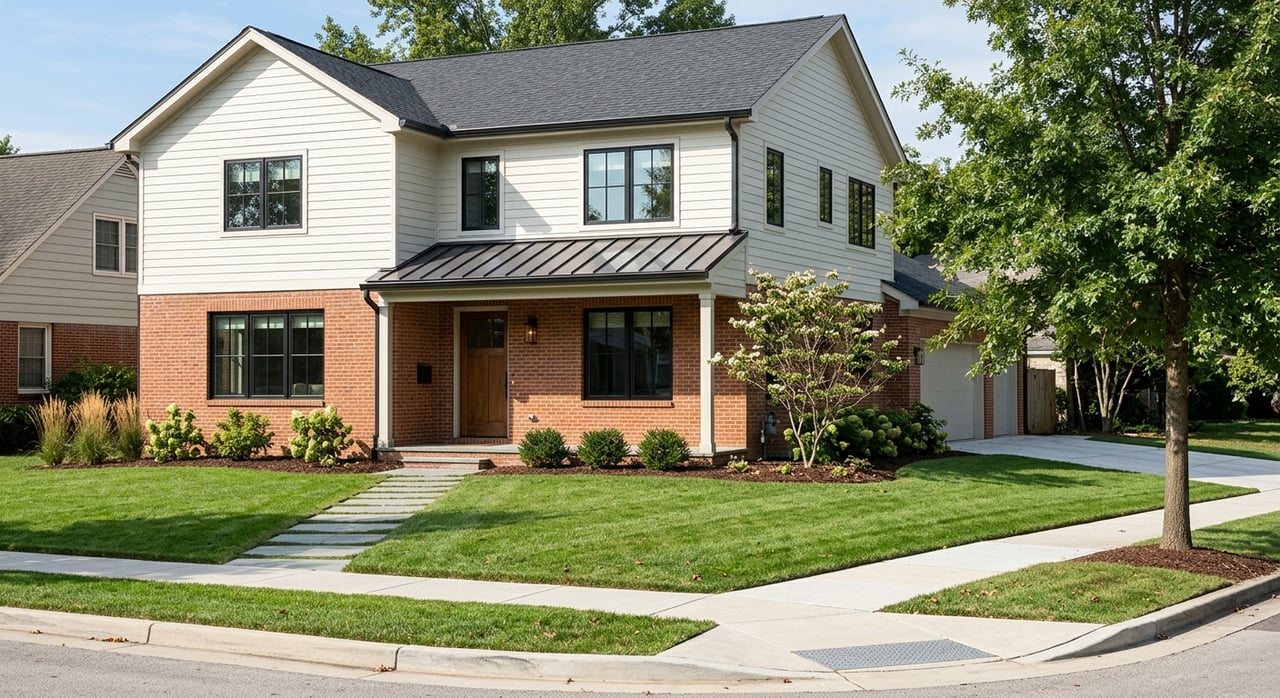
Your commute goals and your preferred home style do not always point to the same area, so it helps to think about both early. Cary’s Housing Plan says detached single-family homes account for nearly two-thirds of housing units. Apartments make up about 25%, while attached homes such as townhomes and two-unit homes remain a limited supply.
That helps explain why some buyers searching for walkable living have a narrower set of options. Cary identifies Downtown, Green Level, and Eastern Cary Gateway as places where walkable, connected living and higher-density development are being encouraged.
In northwest Cary, planning documents describe a mix of housing types and a village-like mixed-use character. That is one reason west Cary often feels newer and more planned compared with older central Cary areas. If you are relocating and trying to choose between a larger home, lower-maintenance living, or a more connected setting, this difference matters.
Verify School Assignments by Address
If school assignments are part of your move, treat them as an address-specific question. Wake County Public School System says each family is assigned a base elementary, middle, and high school by home address. Families can use the Base School Locator to confirm assignments.
That means it is best not to assume a whole neighborhood feeds to a specific school pattern. Even within the same general area, assignment details can vary by property. When you narrow your home search, verifying the exact address is the safest step.
How to Choose the Right Cary Area
If you are trying to narrow your search, start with your real weekly routine, not the map alone. Think about where you drive most often, what time you leave, and whether your commute is fixed, hybrid, or split across several destinations.
A simple framework can help:
- Choose Downtown Cary if transit, walkability, and Cary Depot access matter most.
- Focus on northwest Cary if RTP, Morrisville, RDU, or I-540 access is your top priority.
- Explore south and central Cary if you need flexibility for Raleigh, Apex, or mixed Triangle commutes.
- Pay close attention to corridor access, especially near U.S. 64 and the I-40/I-440/U.S. 1/U.S. 64 network.
- Match your search to the housing type you actually want, since compact and walkable options are not distributed evenly across Cary.
The right Cary neighborhood is usually the one that supports both your commute and your everyday life. If you want help comparing specific areas, commute patterns, and home options in Cary, Raleigh, Durham, or Chapel Hill, Tana Widdows can help you build a search around how you really live.
FAQs
Which Cary area is best for commuting to RTP?
- Northwest Cary is often the strongest fit for RTP commuters because planning documents describe it as convenient to RTP, RDU, and I-540, and Route 310 connects Cary Depot with Wake Tech RTP and the Regional Transit Center.
Which Cary neighborhood area works best for transit commuters?
- Downtown Cary is usually the best fit for transit-focused buyers because it includes Cary Depot, a free park-and-ride, the primary transfer point for GoCary routes, and access to regional bus connections.
Is Cary a good location for commuting across the Triangle?
- Cary can be a practical commuter base because it sits near Raleigh, RDU Airport, and major regional routes, with downtown Durham and Chapel Hill each about 20 miles away.
What roads matter most for Cary commuters?
- Major commuter corridors identified by NCDOT include I-40, I-440, U.S. 1, U.S. 64, and the Triangle Expressway and NC 540 system.
Are west Cary commutes affected by traffic on U.S. 64?
- Yes. NCDOT describes U.S. 64 through western Cary as a high-volume traffic area with heavy rush-hour pressure, and it reports strong long-term traffic growth along that corridor.
Do Cary school assignments depend on the neighborhood?
- School assignments are address-specific. Wake County Public School System says each family is assigned base schools by home address, so you should verify the exact property rather than rely on a neighborhood label alone.