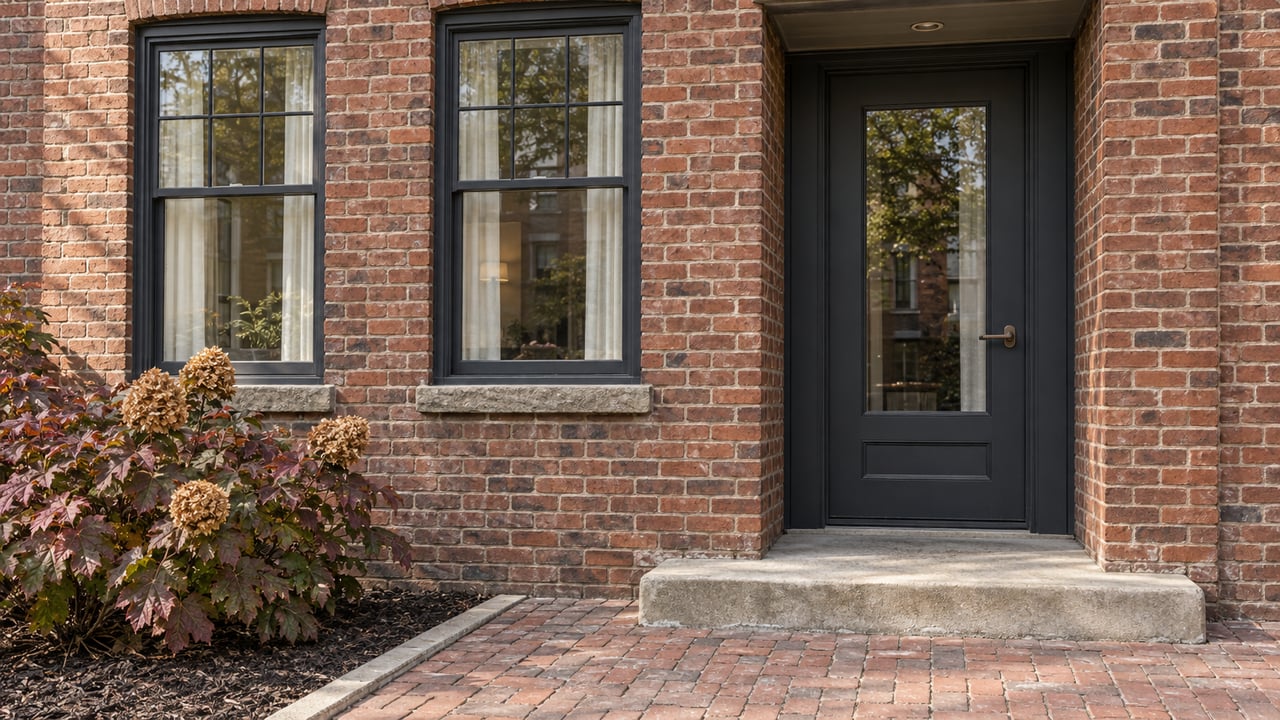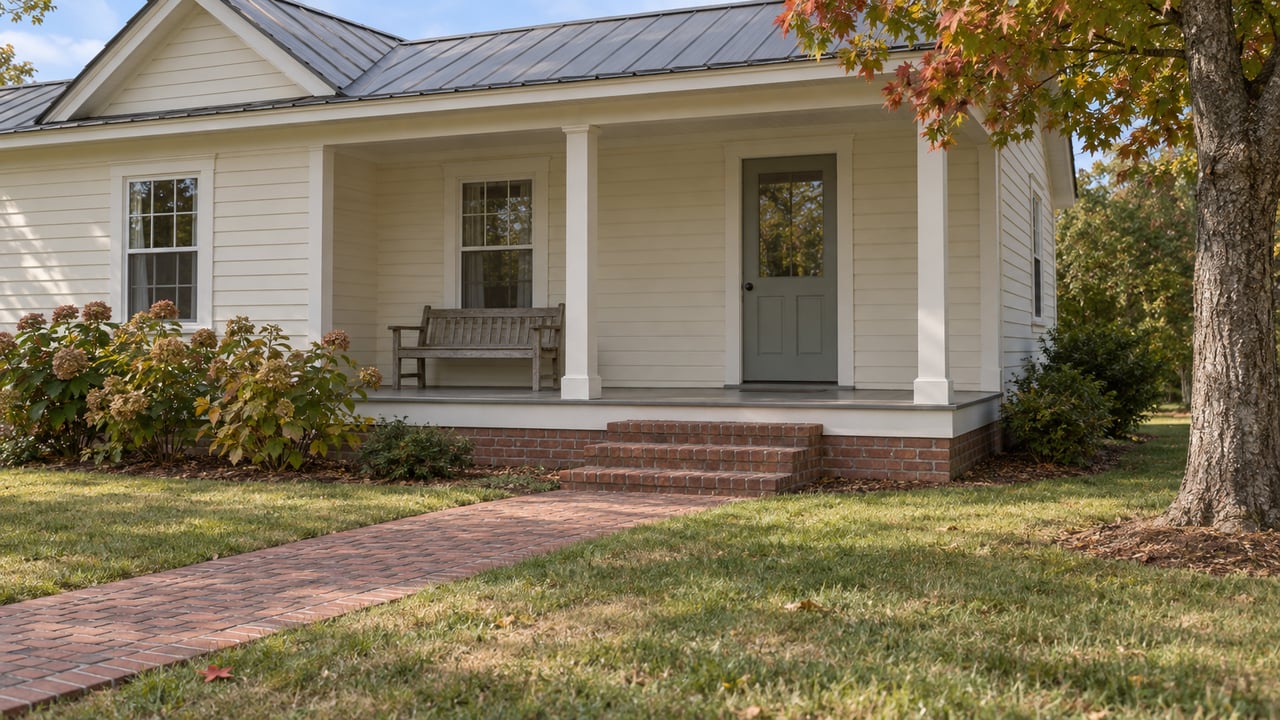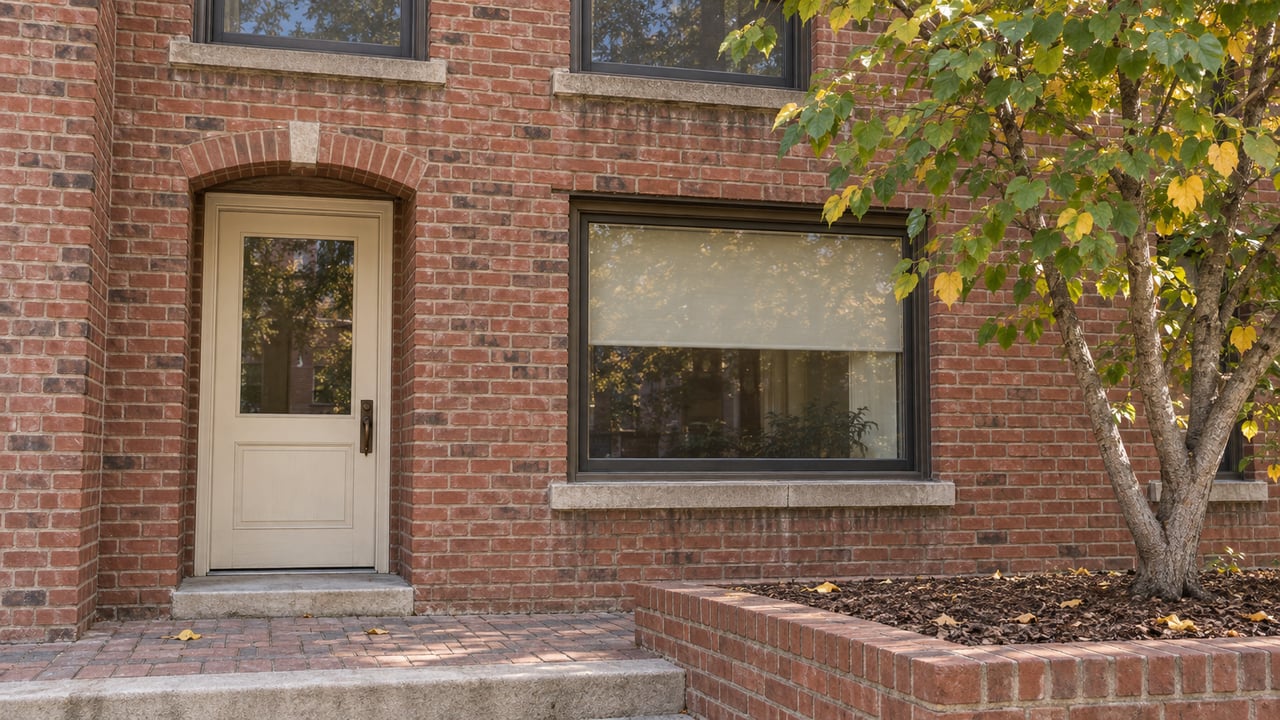
Ask three different sources what a home in Raleigh costs right now and you'll get three numbers within about $10,000 of each other, all hovering around $421,000 to $430,000 for the six months ending in September 2026. The number is solid. It's also describing a home that doesn't exist. A citywide median in Raleigh is one figure, but it doesn't tell you what a buyer gets: a 1920s bungalow two blocks from Fayetteville Street and a brand-new four-bedroom in Knightdale do not compete for the same buyer, lot, or tax bill.
That gap matters more than the headline figure, and it's about to matter in a way most house hunters haven't priced in yet.
Raleigh's Median and Its Wider Market
Raleigh real estate splits along a line locals just call the Beltline, the I-440 loop that circles the older core of the city. Inside it (ITB), you're buying into neighborhoods that were platted before the interstate existed. Outside it (OTB), you're mostly buying into land that was still farmland or forest twenty years ago.
The spread between the two shows up everywhere in the data:
- Citywide, the middle half of Raleigh's sales over the six months ending in September 2026 closed between $310,000 and $650,000, a wider band than the single median number suggests.
- ITB neighborhoods have recently carried a 20 to 30 percent premium over comparable outside-the-Beltline properties, with market snapshots putting the ITB median around $625,000 in mid-2025 against a citywide figure roughly $150,000 to $200,000 lower.
- Oakwood, one of the ITB pockets, was tracking near a $1 million median as of February 2025, up 45.1 percent year over year at the time, though homes there were also sitting on the market longer, a median of 92 days.
- New construction in communities outside Raleigh, such as Wendell Falls and Knightdale, was still starting in the low $300,000s as of September 2026, while established North Raleigh subdivisions such as Wakefield Plantation were listing single-family homes between $500,000 and $900,000.
None of those numbers is wrong. None of them is the median, either. If you're shopping with $450,000, you're not choosing between "expensive" and "cheap" Raleigh. You're choosing between two different kinds of ownership.
Why Land, Not Taste, Explains the Gap
The ITB premium isn't really about charm, though there's plenty of it. Five Points, the historic cluster that includes Hayes Barton, Vanguard Park, Bloomsbury, Georgetown, and Roanoke Park, was built out in the 1910s and 1920s on a fixed footprint. There is no more land to add inside I-440. Every ITB listing is competing against a supply that stopped growing decades ago, which is a big part of why Oakwood carries a Walk Score near 68 against a citywide average closer to 31. You're paying for proximity and for scarcity at the same time.
Outside the Beltline, the opposite is true. Land is still being developed in phases, which is why a master-planned community can offer a $300,000 entry price point on a floor plan finished this year. But the convenience case for OTB living leans partly on infrastructure that isn't finished yet. Complete 540, the outer loop project connecting Apex through to Knightdale, still has its second phase under active construction as of early 2026, with completion still projected for late 2028. Buying OTB today for a commute that assumes a finished loop is buying ahead of the infrastructure, not alongside it.
The County Is Quietly Building Its Own Two Maps
Here's the part of the story that rarely makes it into a neighborhood comparison, and it changes how you should think about timing, not just location.
Wake County used to reassess property values every four years. In March 2025, the Board of Commissioners voted to shorten that cycle, first to three years and then to a permanent two-year rhythm going forward. The next revaluation takes effect January 1, 2027, built from sales data gathered through 2026, with the Schedule of Values headed to a public hearing on October 5, 2026 and final results presented to the Board on January 19, 2027. Notices go out to property owners that same week.
Wake County Board Chair Susan Evans explained the reasoning behind the shorter cycle plainly, saying the county wanted to "help smooth out these increases over time" after the sticker shock of the last cycle, when average countywide values jumped 51 percent between 2020 and 2024.
What almost nobody researching Raleigh home prices seems to know is that the county's own appraisal process quietly mirrors the ITB/OTB split. During the field and office review phase, appraisers physically visit and review every property built before 2000, in person. Everything newer gets an office-based review, calibrated against recent comparable sales instead of a walkthrough. In practice, that means most ITB housing stock, built well before 2000, gets an appraiser standing on the sidewalk. Most OTB new construction gets evaluated at a desk, using the closing prices of homes just like it that sold last year.
If you close on an ITB home this fall, in a market where turnover is naturally slower because the housing stock is older and sellers move less often, your sale price carries outsized weight as one of the few recent comps an appraiser has to work with. If you close on a new build in a fast-selling OTB community, your sale is one of dozens feeding a much larger, faster-updating dataset. Same closing date. Very different influence on what your neighborhood's 2027 values look like.
Why 51 Percent Won't Repeat, and Why That's Not Fully Reassuring
It's tempting to brace for another 51 percent jump. That number came from a four-year window that included the sharpest run-up in Triangle housing history. The 2027 cycle only spans three years, and two of those years have been closer to flat. The math almost certainly won't repeat at that scale.
What it doesn't tell you is what your tax bill will actually do. Your assessed value and your tax rate are two separate levers, and revaluation only resets the first one. The amount due will depend on the 2027 assessed value and any later rate adjustment. Anyone buying this fall, in either submarket, is buying into a number that has an expiration date built into it.
If you're comparing an ITB listing against an OTB one this season, the honest question isn't just "what does the median say a house here costs." It's whether you're buying into a slower-turning, appraiser-visited market where your own closing price will shape next year's neighborhood valuation, or a faster-turning, comp-heavy market where your sale is one data point among many. Both are reasonable places to buy a house. They are not the same bet.
A couple of questions worth asking before you write an offer:
Will my payment jump the day the new value mails in January 2027? Not automatically. The assessed value changes first. The tax rate is a separate decision made by elected officials afterward.
Does the ITB premium hold at today's rates? The premium has held through 2026 even with 30-year rates near 7 percent, because it's driven by fixed land supply rather than by financing conditions. That doesn't mean it holds forever, only that it hasn't moved with rate cycles the way OTB new-construction pricing has.
If you're weighing an older ITB street against a newer OTB community and want to know which one actually fits how you plan to live and what you're likely facing on your first tax notice, that's exactly the kind of conversation worth having before you tour anything. Tana Widdows works both sides of that line across the Triangle and can walk you through what your specific price point actually buys in each direction. Let's Connect.
This article is general information, not legal, tax or financial advice. Consult a qualified professional about your situation.