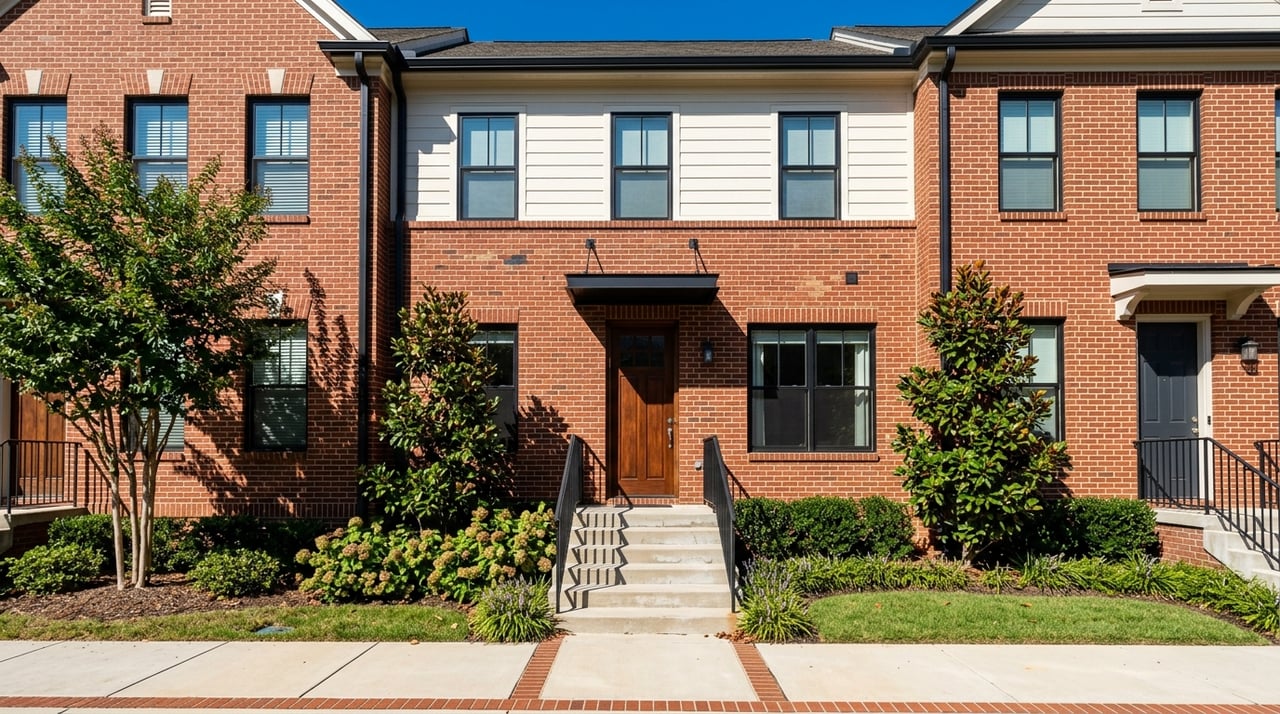
Buying your first home in Raleigh can feel like a tug-of-war between budget, location, and maintenance. If you want more space than many condos offer but a lower entry price than many detached homes, a townhome may land right in the sweet spot. The key is knowing what you are really buying, what it will truly cost each month, and which questions matter before you make an offer. Let’s dive in.
Why Raleigh Townhomes Get Attention
For many first-time buyers, townhomes offer a practical path into homeownership in Raleigh. Current market data shows about 565 townhouses for sale in Raleigh with a median listing price of $325,000, while Raleigh’s overall median sale price was about $425,500 in February 2026. That makes townhomes worth a close look if you want to enter the market at a lower price point.
Townhomes can also appeal if you want a lower-maintenance lifestyle and convenient access to in-town or suburban areas. Common Raleigh townhome areas often include Brier Creek, North Hills, Downtown Raleigh, and North Raleigh. Still, lower exterior upkeep usually comes with HOA dues and community rules, so it is important to weigh both sides carefully.
What a Townhome Really Means
The word “townhome” can describe a style of home, but it does not always tell you the legal ownership structure. In North Carolina, planned communities and condominiums are treated differently under state law. A planned community is generally organized around ownership of a lot, while a condominium is organized around ownership of a unit and common elements.
That difference matters because ownership structure often affects maintenance responsibility, insurance needs, and association rules. In a planned community, an HOA may handle shared expenses like landscaping and some community maintenance. In a condo-style setup, the association often has broader responsibility for shared structures and items such as roofs or driveways.
Before you fall in love with a listing, make sure you understand how the property is legally set up. The listing description alone may not tell the whole story. The declaration and recorded community documents are what define your ownership and the association’s authority.
How Townhomes Compare to Other Options
If you are deciding between a condo, townhome, and detached home, the right fit often comes down to tradeoffs. Your monthly cost, maintenance workload, and level of control may all look different from one property type to another.
| Home Type | Typical Appeal | Common Tradeoff |
|---|---|---|
| Condo | Lower maintenance, often more association coverage | Less direct ownership of exterior and common elements |
| Townhome | More space and privacy than many condos, often lower entry price than detached homes | HOA dues, rules, and varying maintenance responsibilities |
| Detached Home | More autonomy and no shared walls in many cases | Higher price point and more direct maintenance responsibility |
For a first-time buyer, townhomes often sit in the middle. You may get more room and a more house-like feel than a condo, but you still need to understand what the HOA handles and what stays on your plate.
Build a Real Budget First
A lot of first-time buyers focus on the mortgage payment and forget the rest of the picture. The Consumer Financial Protection Bureau notes that homeownership costs go beyond principal and interest. You also need to budget for repairs, property taxes, insurance, HOA dues, and closing costs.
Closing costs typically run about 2% to 5% of the purchase price, not including your down payment. On top of that, HOA dues are usually paid separately from the mortgage payment, according to the Consumer Financial Protection Bureau’s guidance on HOA dues. Those dues can range from a few hundred dollars to more than $1,000 per month.
That means a townhome that looks affordable online may feel very different once you add the HOA payment. You want to look at the full monthly cost, not just the list price.
Budget items to plan for
- Down payment
- Closing costs
- Monthly mortgage payment
- Property taxes
- Homeowners insurance
- HOA dues
- Utility costs
- Repair and maintenance reserves
Look Into North Carolina Buyer Assistance
If you are buying your first home in Raleigh, you may have access to programs that can help with upfront costs. The NC Home Advantage Mortgage offers fixed-rate financing with down payment assistance up to 3% of the loan amount through participating lenders.
North Carolina also offers the NC 1st Home Advantage Down Payment program, which can provide $15,000 in down payment assistance for eligible first-time buyers and military veterans. NCHFA says this assistance comes as a 0% deferred second mortgage, and townhouses are eligible properties.
For this program, a first-time buyer is generally someone who has not owned a primary residence in the past three years. NCHFA also notes eligibility factors such as a 640 or higher credit score, legal U.S. residency, and occupying the home in North Carolina within 60 days. There can be exceptions for military veterans and some targeted census tract purchases, so it is smart to review current eligibility guidance before counting yourself out.
Know the HOA Before You Offer
With a Raleigh townhome, the HOA is not a side detail. It is a major part of what you are buying.
HOA dues are separate from your mortgage, and nonpayment can lead to collections and even foreclosure. North Carolina statutes also include assessment and lien provisions for planned communities and condominiums, which is why you want a clear picture of what the association can charge and enforce.
Questions to ask about the HOA
- What do the monthly dues cover?
- Who maintains the roof?
- Who is responsible for siding and exterior paint?
- Who handles drainage and shared areas?
- Are there pending or possible special assessments?
- Can the association record liens for unpaid charges?
- Are there use restrictions that affect how you plan to live in the home?
These questions matter because two townhomes with similar prices can come with very different monthly costs and maintenance expectations.
Understand Due Diligence in North Carolina
North Carolina’s contract process includes a due diligence period, and that is especially important for first-time buyers. The North Carolina Real Estate Commission explains that the due diligence fee is negotiated, not required by law or by the Commission, and is generally not refundable if you change your mind or find defects during inspection.
That can surprise buyers who assume every upfront dollar is protected. During the due diligence period, you have the chance to inspect the property, investigate the HOA, negotiate repairs, and terminate for any or no reason. But because the fee is commonly nonrefundable, you want to move carefully and ask strong questions early.
What to do during due diligence
- Review HOA documents closely
- Confirm maintenance responsibilities
- Schedule a licensed home inspection
- Compare repair needs with your budget
- Ask about any known upcoming assessments
- Review insurance considerations
- Decide whether the property still fits your goals
Inspection and Appraisal Are Not the Same
This is one of the most common first-time buyer misunderstandings. A home inspection evaluates the home’s condition, while an appraisal estimates market value. The CFPB Home Loan Toolkit makes that distinction clear.
In North Carolina, home inspectors who perform inspections for compensation must be licensed, and they must provide a written contract and report under the state standard of practice. Even in a townhome community, an inspection matters because the home may still have issues inside the unit or in areas that affect your ownership experience.
If problems come up, you can ask the seller for repairs during due diligence. The seller does not have to agree, so it is wise to leave room in your budget for possible repair costs or compromises.
Prepare for Closing Day
As closing gets closer, details matter. The CFPB notes that you should receive your Closing Disclosure at least three business days before closing, giving you time to review the numbers carefully. In North Carolina, licensed attorneys handle property closings and disbursement through trust accounts.
You should also complete a final walk-through before closing. This is your chance to confirm the property is in the expected condition and that any agreed-upon items have been addressed.
Another item to consider is owner’s title insurance. According to the North Carolina Department of Insurance, it is optional, but buyers may want to consider it because title issues can arise from prior liens, unpaid taxes, or other claims.
A Smart First Step in Raleigh
A Raleigh townhome can be a strong first purchase if you want a more manageable price point, less exterior upkeep, and access to areas that may be harder to reach with a detached-home budget. The key is not just finding a home you like. It is understanding the legal setup, full monthly cost, HOA obligations, and due diligence process before you commit.
When you have clear guidance from the start, it becomes much easier to compare options and move forward with confidence. If you are thinking about your first purchase in the Triangle and want practical, responsive support, connect with Tana Widdows for a thoughtful, high-touch approach to your home search.
FAQs
What makes Raleigh townhomes a good option for first-time buyers?
- Raleigh townhomes can offer a lower entry price than many detached homes, along with a lower-maintenance lifestyle, but you need to factor in HOA dues and rules.
How do North Carolina townhomes differ from condos?
- In North Carolina, some townhomes are part of planned communities and some may function more like condominiums, so the recorded documents determine ownership structure and maintenance responsibilities.
What should first-time buyers budget for when buying a Raleigh townhome?
- You should plan for the down payment, closing costs, mortgage payment, property taxes, insurance, HOA dues, utilities, and possible repairs.
What is the due diligence period in a North Carolina home purchase?
- The due diligence period is the buyer’s window to inspect the home, review documents, negotiate repairs, and decide whether to move forward, but the due diligence fee is generally not refundable if you back out for inspection-related reasons.
What HOA questions should buyers ask before buying a Raleigh townhome?
- You should ask what the dues cover, who maintains the roof and exterior, whether special assessments are possible, and what rules or enforcement powers the association has.
Are there first-time home buyer programs in North Carolina for townhomes?
- Yes, eligible buyers may be able to use programs such as NC Home Advantage Mortgage and NC 1st Home Advantage Down Payment, and townhouses are eligible properties under the NCHFA program guidance.
Do Raleigh townhome buyers still need a home inspection?
- Yes, a home inspection is still important because it reviews the property’s condition, and it is different from an appraisal, which focuses on value.